
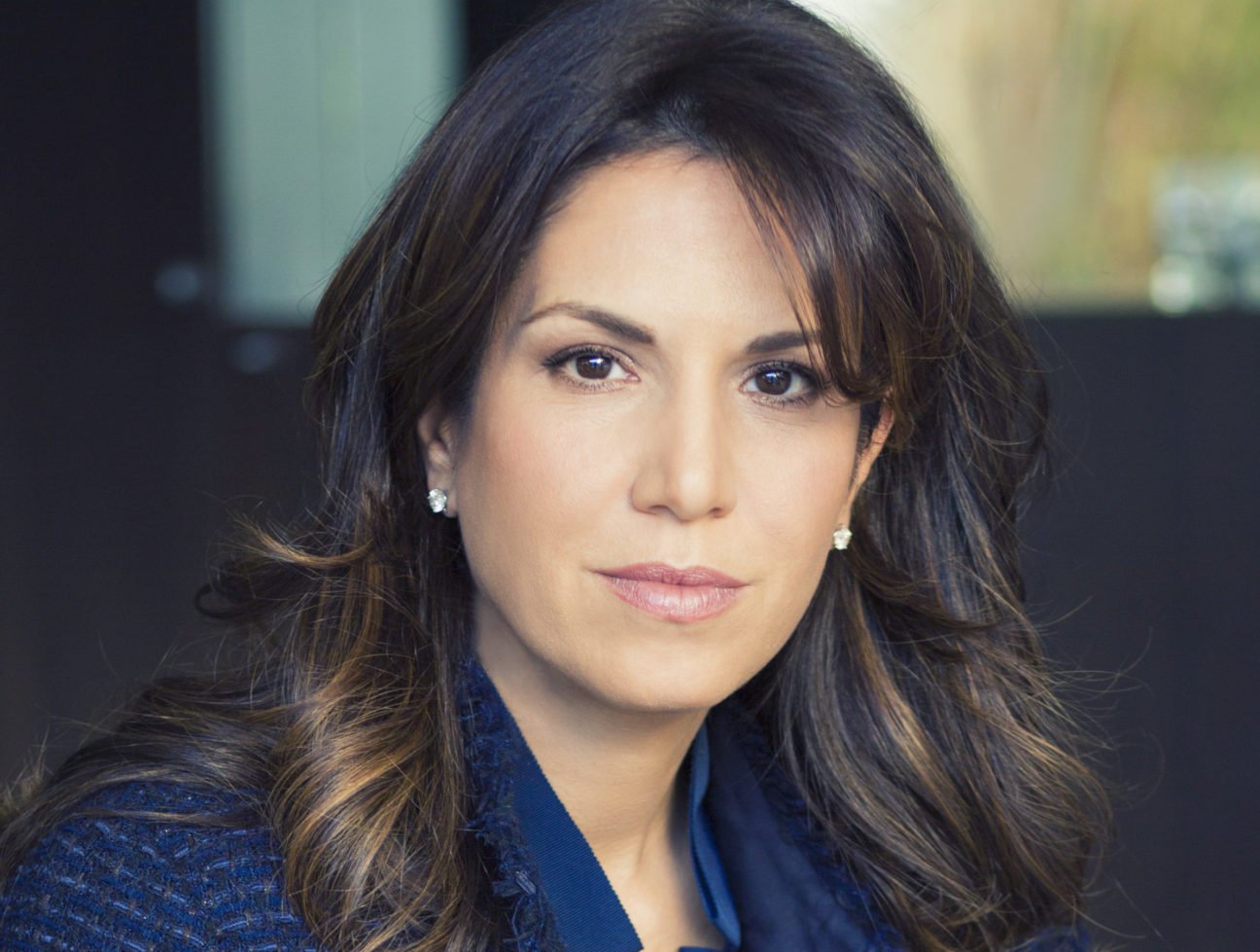
Golnar Khosrowshahi, founder and CEO of Reservoir, took her company public and transformed it into one of the world’s most influential music publishers. Her leadership changed the music business, with a catalog of more than 150,000 copyrights.
Reservoir is a Top 10 market share artist in the United States , according to Billboard , and received the Independent Publisher of the Year award at the 2020 and 2022 Music Week Awards .
Khosrowshahi believes music is a unifying force that transcends boundaries and fosters collaboration. His commitment to a strong organizational culture has left its mark on the industry.
In this interview, he talks about leadership , Reservoir ‘s growth , technological innovation , global expansion , and the economic evolution of music rights and licensing .
How do you define yourself, both personally and professionally?
I’m a mother, so that’s probably my first definition. As a leader, I was shaped by my teams over time. Throughout my career, it was my colleagues who shaped my leadership style and ethics. I don’t think I’d be where I am today without them.
From a leadership perspective, it’s all about empowerment: making sure people have the tools they need to do their jobs well and that we’re flexible enough to adapt to their ever-changing needs. How do we adjust a role to suit the individual rather than seeing it as a hindrance? That flexibility is key. I’ve had the advantage of being in this position as the company grows, which has allowed people to develop and advance in their career paths or even change direction. We try to empower as much as we can, with a focus on development and the belief that true power lies in the team, not in individuals.
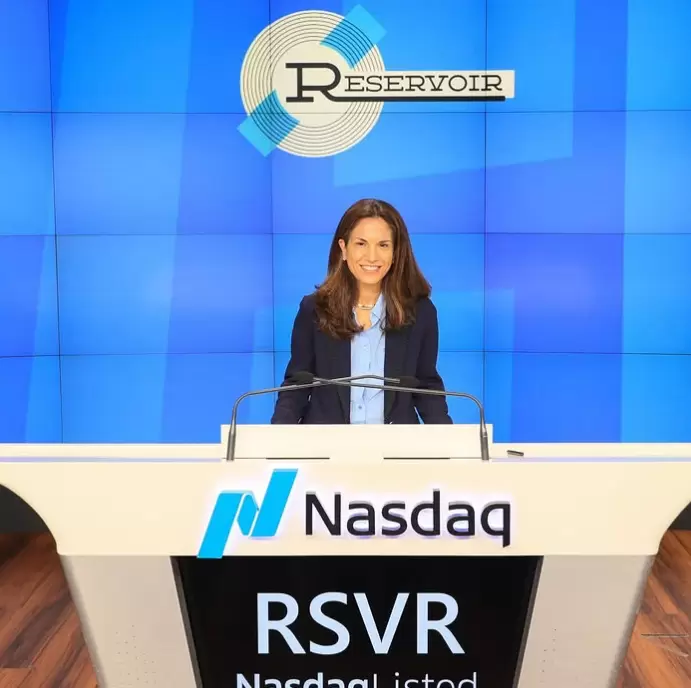
How did Reservoir’s first big hit come about?
The first major milestone took a long time to arrive. The beginnings were tough. In 2006, I began researching the copyright business and how intellectual property was monetized. I came from the music licensing industry, from the demand side, so I understood part of the business, but I wasn’t part of the industry that administered those rights. I knew what it meant to buy those assets, but not to manage them.
I analyzed the publishing, film, and television industries, but music proved to be the most attractive. Perhaps because of my classical music background, but also because the music business had a more predictable financial model than other entertainment sectors. Unlike books, which have a finite life cycle, music always had a history of continuous and predictable monetization, similar to a fixed income. That’s why we focused on music.
It was a slow and error-ridden process, evaluating assets and buying copyrights. In 2007, the industry was at its lowest point in terms of perceived value for music assets. Looking back, we should have bought everything we could get our hands on, because at the time, they were selling for rock-bottom prices.
The big turning point came in 2010, when we bought TVT. That changed everything. We acquired a high-quality catalog that defined an era. It remains one of our most profitable catalogs today. It arrived just as music consumption was shifting toward hits rather than full albums. And that was precisely what TVT offered: hit after hit. That was a key moment that defined our investment strategy.
Your father was one of your most influential mentors, with whom you speak every day. How has that relationship evolved since 2007, and what were the most important lessons he taught you?
It’s still as demanding as ever, and it will be for life. I value it very much, it’s an example of someone completely committed to the business 24 hours a day. You learn from that; it forces me to be better prepared, more informed, and to understand the importance of being the most knowledgeable person in the room.
Our relationship evolved consciously and deliberately. Now that you mention it, I realize there was a clear shift in his priorities: first, he’d figure out what I needed help with, provide it, and once that was resolved, he’d move on to something else. I hadn’t realized it until now, but looking back, the evolution is evident. Honestly, this was the most important relationship of my life because of the way it guided me.
Reservoir can project the performance of a music asset with 98% accuracy over time. Based on what you know today, what are three to five things you would tell yourself about asset valuation in 2007?
In 2007, we should have bet with more conviction on streaming : its monetization, market penetration, and subscription growth. I say this with the advantage of time. I don’t know if it would have been so easy at the time because we had no visibility into what the numbers would look like. But we could have at least built a model based on reasonable assumptions.
You also mentioned something about genres: that, in retrospect, you wouldn’t compare the potential value of a country song to a hip-hop song in a specific market because the financial opportunities are different.
Yes, and we learned it very quickly. The first assets we bought were from Kenny Alin, Barry, and Rich, along with Vicki McGahee. At the same time, we acquired Bruce Roberts’ catalog. Bruce is still a client today, but his catalog is pure pop. We quickly learned how country decays compared to pop, and that country has a very different decay profile.
Even today, if you look at the country charts, there’s much more week-to-week movement at the top compared to pop. Pop songs tend to last longer.
Looking back, some truths remain: genres have different rates of decline and levels of commercialization. If a song doesn’t have a «clean» version, for example, it’s much harder for brands like Procter & Gamble to license. That was something we had to consider in our models from the beginning.
As I mentioned before, the concept of a «hit song» became increasingly important. Chart performance and sales history began to matter more, leading us to evaluate songs individually rather than relying solely on revenue-based assessments. Album songs behaved very differently than hit songs, and we had to adjust our valuation methods accordingly.
In 16 years, no one at the senior level has left the company. What do you attribute this to?
We have a very flat hierarchy where people can connect with whomever they want. I think part of that has to do with what I mentioned earlier: the company was always growing, which created a dynamic environment for our employees. Key moments, like going public or acquiring Tommy Boy, are milestones that can change someone’s role overnight.
The challenge is to maintain this culture of accessibility, entrepreneurship, and mobility as we grow and become more institutionalized. So far, we’ve succeeded.
At some point, it’s going to be unsustainable for me to maintain so many one-on-one relationships, and I think that’s part of what helped us retain talent. But I also think there’s a path forward: we can continue to scale without losing what makes our culture special. If I look at my father’s organization, most of his team has been there for 30 years. So it’s possible. It all comes down to people feeling empowered, having a clear development plan, and seeing opportunities for growth and mobility if that’s what they’re looking for.

What role did technology play in Reservoir’s growth?
When we started, the standard was pretty low: we used Microsoft Office and managed royalties in Excel. Rell , our president and COO, was one of the creators of Right Track, a royalty platform, so he already had experience developing these systems.
We’ve always had the position that we trade in a digital asset, so everything around it should be digital too. For a time, Rell called it «a war on paper.» For example, we stopped paying royalties with checks. I used to spend hours signing them, and it was incredibly inefficient.
We’re now working on automating royalty processing with artificial intelligence and licensing automation. We’re looking to handle all incoming licensing requests automatically, rather than the licensing team having to respond to each one manually. Thanks to technology, we understand and manage our data much better, track revenue, and monitor music usage.

Having a digital fingerprint for a song, along with services that track that fingerprint, helps us a lot with monetization. In short, we’re more effective at monetizing intellectual property thanks to the technology we have, and this is only going to get better. We’re also getting better at defining music, breaking down metadata in more detail. This makes us more effective at licensing, curating playlists, and implementing marketing strategies. That’s the role of technology in our business today.
The Changing Economy of Streaming
If you could change one major thing about the current landscape of digital services like Spotify and Apple, what would it be?
I’d say the reclassification of Spotify’s bundles remains the main issue. From what we understand, agreements with the major labels mitigated some of the impact of bundled pricing, but it remains a key concern. Another important topic is the discussions surrounding CRB5 and royalty rates for songwriters. These two challenges take priority over concerns like digital footprint management, which we already have covered with third-party support.

What are bundled pricing methods and how do they affect independent labels compared to major record labels?
In April 2024, Spotify announced an accounting reclassification, converting all US subscribers into users of a bundled product that includes music and audiobooks. Because it’s classified as a bundle, Spotify can allocate part of the subscription to music and part to audiobooks, similar to how Amazon Prime distributes its fee between music, shipping, and other services. Apple offered bundles for years, but the key difference is that it never automatically transferred all its subscribers to a bundled plan; users had to opt in.
When Spotify made this change, it reduced the total royalty revenue, which lowered payments to publishers and songwriters. In the US, royalty rates are set by the Copyright Royalty Board, so it’s not a free market system. Recently, Universal and Warner reached direct agreements with Spotify, addressing the bundling issue in some ways, but the details of those agreements were not disclosed.

From our position at the NMPA (National Music Publishers Association), we’re deeply involved in advocating for songwriters ahead of CRB5, the upcoming royalty rate-setting process. Our priority is to minimize the long-term impact of Spotify’s reclassification and ensure songwriters continue to advance their compensation, not regress.
Music is one of the few industries where the same product is available globally, in real time, without the need for translation. We don’t dub lyrics or adapt songs for different markets; it’s inherently universal.
Looking to the future: the culture movement
Music has a natural way of communicating shared experiences, making different groups of people feel understood and connected. You’ve talked about this in the past and mentioned that one of your goals is to facilitate the movement of culture. If Reservoir achieves this, what would success mean in five or ten years?
That cultural movement is key to me. I chaired the board of Silkroad, Yo-Yo Ma’s organization, for 12 years, and our mission was to facilitate cultural exchange through music. My work there laid the groundwork for what I believe we can do at Reservoir, as we work with composers and artists from around the world.
Success for Reservoir would mean more collaborations between our artists in the U.S. and in emerging markets like India, North Africa, and the Middle East.
I’d love to see collaborations between artists from Cape Town, Muhammad Ramadan, a hip-hop star in Egypt and the Arab world, and Seth Jones, who co-wrote Espresso in Los Angeles and Nashville. Just by releasing music and getting people to listen to it, we’re already influencing culture. And that’s crucial, not just for the music industry, but for fostering understanding, dialogue, and humanity in general.
