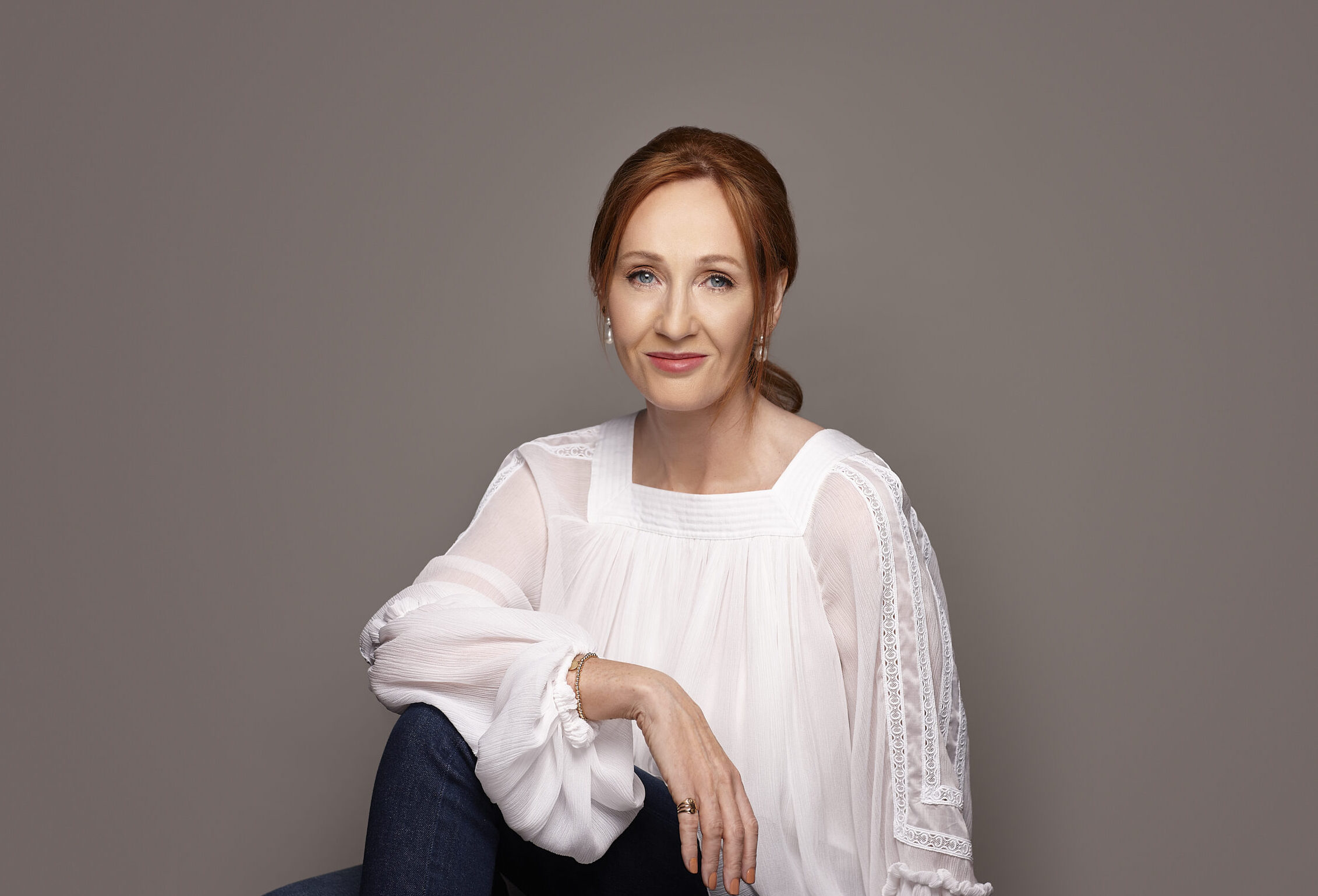
The Harry Potter books took her from being a single mother living on welfare to becoming an author with a ten-figure fortune. But her enormous donations had left her out of the billionaire club. Now, with new books, films, a play, and several theme parks in the Potter universe—and despite the controversy she generates on social media—she’s returned, almost as if by magic, to the three-comma club.
Beyond the intense cultural battle, 59-year-old JK Rowling’s business empire has reached its greatest dimension. In the four years since she began speaking out on trans rights in 2020, Forbes estimates that Rowling has earned more than $80 million a year from sales of her books and the huge array of Potter- inspired spin-offs : films, TV series, theme parks, video games, plays, and merchandise.
Even with the UK tax burden and his extensive charitable activities, he comfortably rejoined the billionaires’ list. According to Forbes estimates , his net worth is US$1.2 billion.
Rowling was a regular on Forbes ‘ billionaires list from 2004 to 2011—the height of Pottermania —until a 2012 report revealed philanthropic donations of $160 million. Since then, she has rebuilt her ten-figure fortune with multimillion-dollar income from every possible source.
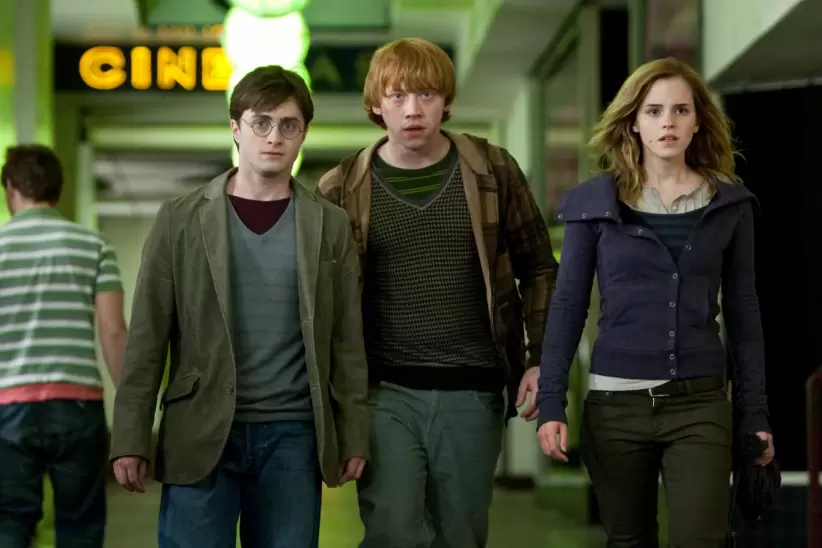
And that momentum doesn’t look like it’s slowing down anytime soon . A new Harry Potter series for HBO Max goes into production this summer and, if all goes according to plan, will run for a decade starting in late 2026. The bet is on generating a whole new crop of fans. Forbes estimates that Rowling could pocket about $20 million a year for her involvement in the project, part of a broader deal with Warner Bros. She was «very, very involved in the selection process of the writer and director,» HBO Max CEO Casey Bloys said in November. It stands to reason that she also had a hand in casting the new Harry, Hermione, and Ron, who were announced Monday .
When asked about Rowling’s political views on an episode of The Town with Matt Belloni in April, Bloys responded: «She’s entitled to those views. And if you want to debate her, you can go on Twitter.»
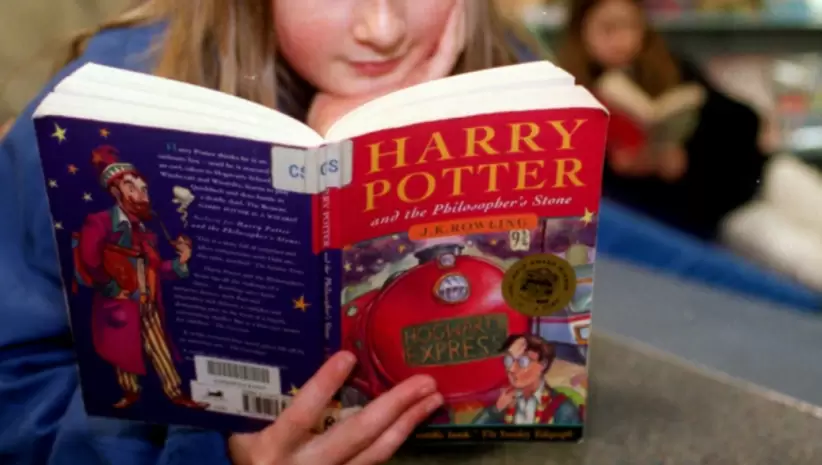
In the nearly three decades since the publication of Harry Potter and the Philosopher’s Stone in 1997, Rowling has cleverly expanded the Potter universe, transforming it into a franchise that, all indications are, will endure as long as other British icons like Sherlock Holmes and James Bond. According to Habo Studio—a consultancy that measures the strength of intellectual property brands in the U.S. through surveys of thousands of consumers— Harry Potter is the sixth strongest entertainment brand worldwide and the number one among millennials.
Love at first sight
Warner Bros. recognized the commercial potential of Rowling’s work from the start. It licensed the film rights even before the first book came out, when she was still a single mother living on welfare. «As poor as it’s possible to be in modern Britain without being homeless,» she told the London Times in a recent interview.
By the time the first film hit theaters in late 2001, Rowling had already published four Harry Potter books and sold more than 100 million copies. That took her off state assistance and rocketed her to fame as a multimillionaire celebrity. Just two years later, her then-agent, Chris Little, told Forbes that the series had already sold 250 million copies, further increasing her fortune.
The film franchise grossed nearly $7.7 billion at the global box office through its final installment in 2011, becoming the highest-grossing film franchise in history at the time. By then, Rowling’s contract with Warner Bros. had already been renegotiated several times to include various clauses and protections: profit sharing, an executive producer credit on the final two films, and, most importantly, full control over any sequels she didn’t write. This meant no new Harry Potter content could move forward without her approval.
If Rowling defended anything more resolutely than her political ideas, it was the rights to her characters.
That clause gave her leeway to negotiate control of the script for Fantastic Beasts and Where to Find Them , the Harry Potter spin-off released in 2016, and its two sequels. The third, due out in 2022, faced public backlash, with calls for a boycott over Rowling’s stance on transgender rights. Fantastic Beasts: The Secrets of Dumbledore grossed $400 million worldwide on a budget of more than $250 million, and was widely considered a flop.
Still, Rowling was far from canceled. By then, tickets for her play Harry Potter and the Cursed Child were still selling steadily on Broadway, in London’s West End, and in five other cities around the world. Since its premiere in 2016, it has grossed more than $1 billion, of which Rowling receives a share.
At the same time, HBO Max was producing the fifth season of CB Strike , a series based on the crime novels Rowling wrote under the pseudonym Robert Galbraith. And in 2023,a new video game —Hogwarts Legacy— sold 24 million copies and became the best-selling game of the year, bringing in another $1 billion.
Buoyed by that success, Warner Bros. wanted to double down on new projects tied to the Potter universe. When David Zaslav took over as CEO in 2022, he traveled to Scotland to meet with Rowling and discuss ways to create more content from the wizarding world. Although she held the rights to the prequels and spin-offs, Warner Bros. retained control of the material from the original seven novels. Because of this, the studio moved forward with the idea of a remake of the main series. In 2023, Rowling gave the project the green light.
«Max’s commitment to preserving the integrity of my books is important to me,» Rowling said in a statement last April, when the new series was announced.
While the Potter universe seems ubiquitous, some analysts believe that Rowling’s strict control and near-exclusive ownership of the world helped avoid the saturation and erosion that plagued other popular franchises, such as the Disney-run Marvel and Star Wars universes .
Wherever the Potter brand appears, there’s demand. When Universal’s Islands of Adventure park debuted its first Wizarding World attraction in 2010, attendance jumped 36% and revenue increased 40%. Comcast’s annual financial report described it as «transformative for the company,» and they’ve since added Harry Potter attractions to their parks in Orlando, Hollywood, Tokyo, and Beijing. All saw an increase in visitor numbers.
Something similar is happening an hour north of London. The Warner Bros. studio tour, under the theme «The Making of Harry Potter,» generated revenue of more than US$300 million and operating profit of US$120 million in 2023.
«Nothing has ever driven a 36% increase in park attendance, not at Disney, not at Six Flags, not at anyone else,» said Dennis Spiegel, founder and CEO of International Theme Park Services. «The Harry Potter licensing deal , to me, is probably the best one that’s been signed in theme parks in the last 40 years.»
Universal holds the license to the Warner Bros. property, and because of this, Rowling collects a percentage of every sale at those parks—everything from wands to scarves to Butterbeer. According to Forbes , theme parks were Rowling’s second-largest source of income over the past decade.
JK Rowling’s publishing empire
Of course, the foundation of Rowling’s empire remains the sale of her books. The Harry Potter series has sold more than 600 million copies worldwide, according to its US publisher, Scholastic, and has now spent 843 weeks on The New York Times bestseller list , a number that continues to grow.
The hardcover edition of the Harry Potter and the Cursed Child screenplay —written by playwright Jack Thorne, but based on a story by Rowling, Thorne, and director John Tiffany—sold more than four million copies in its first year in 2016. The picture book Christmas at Hogwarts was also the best-selling holiday title of 2024.
Since 2013, Rowling has also published five novels in the Cormoran Strike series under the pseudonym Robert Galbraith. She never sold the digital rights to her work. Instead, she founded Pottermore Publishing in 2012, a business that grew during the pandemic and now pays her several million annually.
A spokesperson for The Blair Partnership, the team that manages Rowling’s career, declined to comment on her estate, but sent this statement to Forbes : “The global passion for Harry Potter continues to drive growth and innovation across the brand, supported by our incredible partners in publishing, theme parks, merchandise, theater, video games and television. With numerous exciting new projects underway globally, fans of all generations will be able to experience the magic of J.K. Rowling’s beloved stories in an even more meaningful way. We’re excited about this new chapter in the franchise, which includes the 10th anniversary of Harry Potter and the Cursed Child , full-cast audiobooks on Pottermore and Audible featuring over 100 actors, and of course, the highly anticipated TV series on HBO Max.”
If it weren’t for her strong commitment to philanthropy, Rowling’s net worth might be considerably higher. Forbes estimates that she’s donated more than $200 million over the past 20 years, primarily to three causes: Lumos , which helped more than 280,000 children growing up in orphanages in countries including Romania, Haiti, Colombia, and Ukraine; Volant , which supports victims of sexual abuse and domestic violence; and the Anne Rowling Regenerative Neurology Clinic, which treats diseases including multiple sclerosis, the same disease that killed Rowling’s mother when she was 25.
She also made it clear that she has no plans to move from Edinburgh, Scotland, and that she is willing to pay the country’s highest tax rate of 45%. In 2010, she wrote that she wanted her children to be «citizens, with all that implies, of a real country, not free-floating expatriates, living in the limbo of some tax haven and associating only with the children of equally greedy tax exiles.» She saw it as a way of giving back for all she had achieved in her life, adding, «I am indebted to the British welfare state» and that «my notion of patriotism» is about paying into the system for others.
Still, Rowling makes no secret of her wealth on social media, often using it as a direct response to critics of her anti-trans rights stance. “How do you sleep at night knowing you’ve lost an entire audience that buys your books?” one X user asked her in 2022. “I read my most recent royalty checks,” Rowling responded , “and found the pain goes away pretty quickly.”
