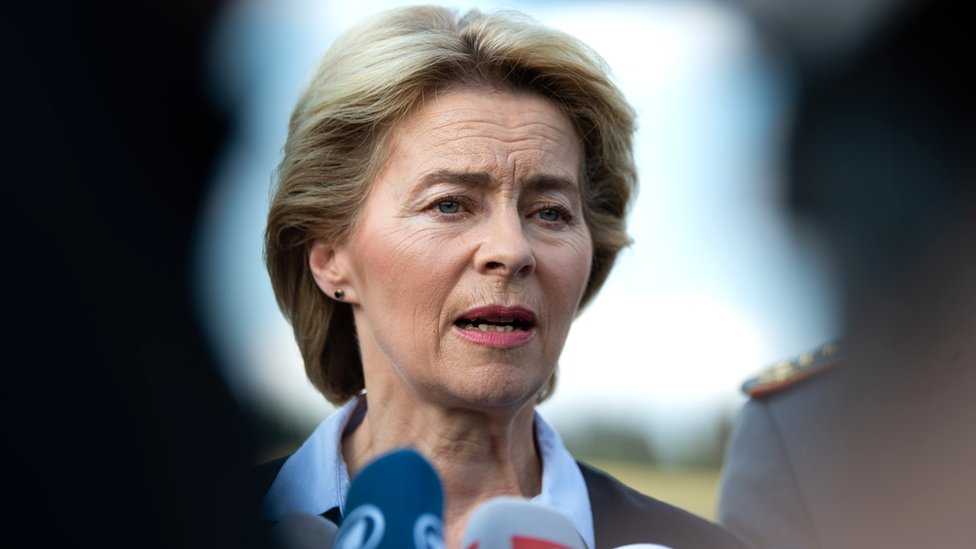
Donald Trump announced that, starting August 1, a 30% tariff will be applied to all products imported into the United States from the European Union , with the possibility of further increases in the event of countermeasures from Brussels. The EU, at least for now, has chosen dialogue. «We have always been very clear in our preference for a negotiated solution,» said European Commission President Ursula von der Leyen, announcing the suspension of countermeasures until early August to prioritize negotiations. However, Brussels has stated that it has already «prepared and agreed on an initial list of countermeasures» and is ready «for all possible scenarios.»
The possible answers
European Trade Commissioner Maroš Šefčovič also confirmed this position: «We continue to work with the US administration and prioritize a negotiated solution by the August 1 deadline. I cannot imagine walking away without any effort.» But the EU must also be prepared for the worst-case scenario , «including, if necessary, thoughtful and proportionate countermeasures to restore the balance.»
The EU has already approved two response packages. The first, worth €21 billion , was developed after the United States imposed 25% tariffs on European steel and aluminum last March. The second, worth €72 billion , was a reaction to the 10% «universal» tariffs announced by Trump between April 5 and 9 and includes measures that would affect strategic sectors of the American economy, from agri-food to industrial goods.
The reaction of France and Germany
Not all EU countries share Brussels’ approach. Many are pushing for a more decisive response. French President Emmanuel Macron expressed «strong disapproval» of Trump’s decision, calling on the European Union to «resolutely defend the interests» of its members. Macron reaffirmed the use of the anti-coercion instrument , the EU’s trade defense mechanism, which allows for unilateral retaliation, including restrictions on investments, public procurement, and potentially even on US big tech companies. German Finance Minister Lars Klingbeil also expressed support for «firm countermeasures» against the United States.
What’s happening in Italy
Faced with the threat of American tariffs, Prime Minister Giorgia Meloni said that «a trade war in the West would make us all weaker in the face of global challenges. Europe has the strength to secure a fair deal. Italy will do its part, as always.»
But the repercussions could be severe. Trade associations are predicting a «blow» that could reach 35 billion euros a year . Overall, the impact could translate into the loss of nearly 180,000 jobs.
